The Rooms That Hide the Risk
"I realized I'd stopped seeing the rug by the door. The dim hallway. The bathroom with nothing to hold onto."
That's how one family described it. Not with guilt, but with a quiet kind of recognition. They'd been in that house for decades. The familiarity that made it feel like home was the same thing that made it hard to see clearly.
This is one of the less-talked-about parts of supporting an aging parent. Not the disappearance of things, but the disappearance of the noticing. The eye stops registering what the mind has already filed as known.
What the rooms are already telling you
Most hazards in an older adult's home do not announce themselves. They have been there long enough to become part of the landscape: the step down into the garage, the light switch at the far end of a dark hallway, the grab bar that was never installed.
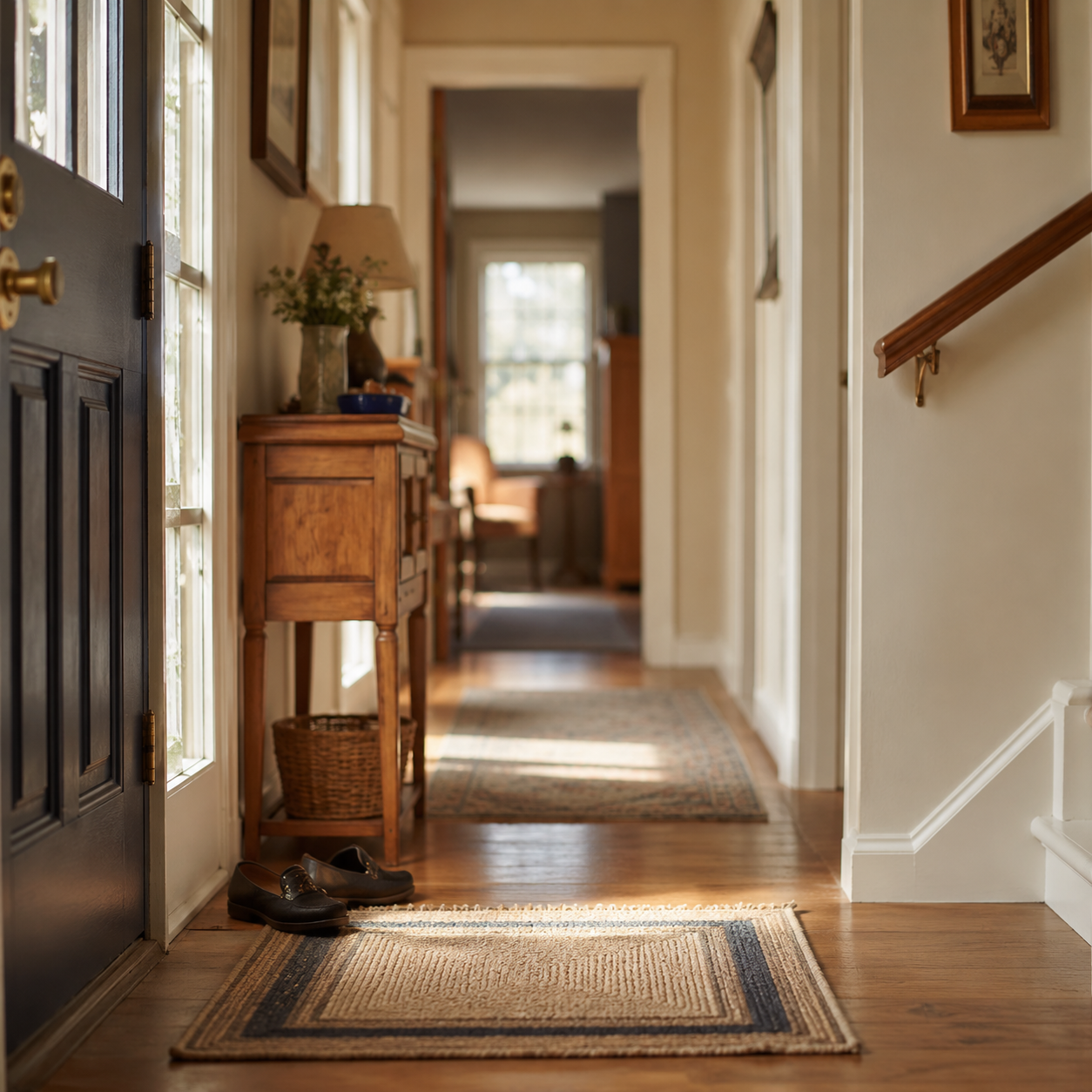
Thinking about how to make a parent's home safer often starts with a single moment: a near-miss on the stairs, a phone call from a neighbour, a visit where something finally catches the eye.
It does not have to start there.
The rooms worth looking at first are the ones that get the most daily use, and where the body is most vulnerable: the bathroom, the bedroom, the kitchen, and every transition space — stairs, thresholds, the path walked in the dark at 3am.
In each of these, the questions are quieter than you might expect. Is there something to hold onto when balance shifts? Is there enough light? Is the floor forgiving?
What this means for your family right now
For many GTA families, aging in place home modifications are often a quieter project than expected — one that does not require a renovation. Many of the most meaningful changes are small, inexpensive, and possible to make in an afternoon.
A non-slip mat. A motion-sensor nightlight. A grab bar in the shower. Frequently used items moved from high shelves to counter height.
When families look at fall prevention seniors Toronto, one practical truth keeps coming forward: the highest-risk moments tend to be the most ordinary ones. Getting up in the night. Stepping out of the tub. Crossing a threshold between floor surfaces.
Working through a home safety checklist aging parents can use with family, room by room, without rushing, is often where families find the most clarity. The list itself is useful. The act of looking is what surfaces what was already there.
A closing thought
You already know this house. That's not a disadvantage. It just means you are practicing a different kind of attention than the one you usually bring.
Moving from familiarity to careful observation is something any family can do. And once you start seeing, it tends to stay with you.
What's one part of your parent's home you may have stopped really looking at?